
Black Car Service vs. Rideshare
What you're actually paying for when you book
Every ground transportation option looks roughly the same at the moment you book it. A vehicle, a driver, an arrival time, a price. Two options side by side, one number lower than the other, and the decision seems obvious.
Then the ride happens, and the difference is immediate.
The gap between rideshare and professional black car service isn’t marketing language. It’s structural. It comes down to who employs the driver, who owns the vehicle, who answers when something goes wrong, and what happens at 4:45 a.m. when your car doesn’t show. Those questions have completely different answers depending on which model you booked, and you only find out which one you’re in after you’ve committed.
Here’s the short version:
|
|
Rideshare |
Professional ground transportation |
|
The driver |
Independent contractor. Can decline or cancel your trip. |
Employee. Background-checked, drug-tested, trained. Assigned to your trip. |
|
The vehicle |
Someone’s personal car. Maintained on the owner’s budget and timeline. |
Owned fleet. Scheduled maintenance, inspected before dispatch, replaced on a cycle. |
|
Insurance |
Personal policy with coverage layers that shift depending on app status. |
Commercial passenger carrier coverage. One policy, no ambiguity. |
|
Monitoring |
No fleet-level monitoring. |
Every vehicle tracked. Location, diagnostics, and driving behavior. |
|
When something goes wrong |
An algorithm looks for whoever is nearby. |
Onsite dispatch, staffed 24/7, reroutes or sends another vehicle. |
|
Flight delays |
Your booking is tied to the time you picked. You start over. |
Flight tracked. Pickup moves with it. |
|
Groups |
Multiple cars, multiple drivers, multiple arrival times. |
One plan, one point of contact, vehicles sized to the party. |
The difference starts with who's driving
In the rideshare model, the driver is an independent contractor using a personal vehicle. They chose to be available this morning. They can also choose not to be, and if a fare somewhere else pays better, or the trip to the airport at dawn isn’t worth the drive, the ride gets declined or cancelled. Nobody in that system is accountable to you for the outcome, because the driver isn’t an employee and the platform isn’t a transportation company.
Professional chauffeur service inverts that. At Sterling Limousine & Transportation Services, chauffeurs are employees. They’re background-checked, drug-tested, and trained, and their assignment isn’t a ping they can decline. It’s a shift with your name on it.
Training is where the distinction gets concrete. A gig driver qualified by owning a car and passing a records check. A Sterling chauffeur goes through defensive driving instruction, route and terminal logistics, and the hospitality standards that separate someone who transports you from someone who drives near you. They know when to help with luggage without being asked and when silence is the service you actually want.
Professional car service: the vehicle isn't someone's personal car
A rideshare vehicle belongs to whoever accepted the trip. Maintenance happens on the owner’s budget and the owner’s timeline. Cleanliness depends on how the last passenger left it and whether the driver had a spare ten minutes. There’s no fleet standard because there’s no fleet.
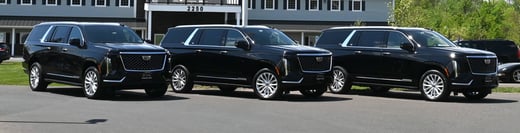
An owned fleet is a different economic reality. Vehicles are maintained on a schedule, inspected before dispatch, and replaced on a cycle rather than driven until something fails. Detailing isn’t a courtesy, it’s part of the turnaround. You know what’s arriving because the company that’s arriving owns it.
Every Sterling Limousine vehicle carries monitoring technology, and it watches two things at once: the vehicle and the person driving it.
On the vehicle side, location and diagnostics are tracked continuously rather than checked periodically. A maintenance issue surfaces as a warning instead of a breakdown on your schedule, and dispatch always knows where every car in the field actually is.
On the chauffeur side, driving behavior is measured. Speed, braking, cornering, attention. Not trusted, not assumed, measured. That data feeds back into coaching, so habits get corrected while they’re still habits.
The insurance question nobody asks until it matters
If something happens on the road, insurance decides who pays. That’s the whole reason it matters.
Companies that carry passengers for a living are required to hold serious liability coverage. Rideshare drivers carry a personal policy plus layers that switch on and off depending on whether the app is open, whether they’ve accepted a ride, and whether you’re in the car. Which layer is active at the moment of a crash is a real question with a complicated answer, and the roadside is a bad place to find out.
Professional transportation doesn’t have layers. One commercial policy, always on. That costs money, which is exactly why the cheap option skips it.
What to ask any transportation provider before you book:
• Are your drivers employees or independent contractors?
• Do you own your fleet, or do drivers use their own vehicles?
• What commercial liability coverage do you carry?
• Are you licensed and permitted for airport pickups?
• Who answers the phone at 4 a.m. if something goes wrong?
• Do you track flights, or do I need to call you when mine is delayed?
Dispatch is the actual product
When a chauffeur runs into an accident, someone has to reroute. When a vehicle has an issue at 5 a.m., someone has to send another one. When a pickup window shifts, someone has to know before you do. In an algorithmic model, that someone is a system that reassigns your request to whoever happens to be nearby, if anyone is. If nobody is, you’re standing on a curb with a phone.
Sterling Limousine runs onsite dispatch, staffed 24/7. Real people, in a real room, watching real vehicles. Monitoring data doesn’t sit in a log. Dispatchers read it. You never see that payroll cost until it’s the only thing between you and a missed meeting.
Where the gap shows up most: airport transportation
Airports are where ground transportation either works or falls apart, because airports are where every variable stacks up at once. Traffic, terminal geography, parking restrictions, luggage, and a departure time that doesn’t negotiate.
Professional airport transportation absorbs those variables before you encounter them. Your chauffeur knows which terminal, which door, and which approach, whether that’s Philadelphia International, Newark, JFK, LaGuardia, or a private terminal where the aircraft doesn’t have a gate number. They’ve staged the pickup rather than started driving toward you when the request came in.
What happens when your flight is delayed
In the on-demand model, your booking is tied to a time you picked when you booked. The flight slips two hours. The driver who accepted your trip isn’t waiting around for it, because waiting doesn’t pay. So you land late, tired, and start over from the beginning: open the app, request a ride, wait in a queue with everyone else from your flight, and hope.
Sterling Limo tracks your flight. When it changes, dispatch knows, and the pickup moves with it. Nobody needs a text from you at baggage claim explaining what happened, because the operation has been watching the whole time. You walk out and your car is there.
When one car isn't enough
Split a group across multiple cars and nobody arrives together. Different routes, different traffic, different arrival times. Someone’s always the last to show up, and everyone else is standing around waiting.
Professional limousine service treats groups as one unit. One point of contact, one plan, vehicles sized to the party, and a dispatcher who knows where all of them are. For weddings, corporate events, concerts, sporting events, winery tours, and bachelor or bachelorette parties, the coordination is the product.
Where the money actually goes
• The vehicle itself. Late-model vehicles, financed and replaced on a cycle rather than driven into the ground.
• Maintenance. Scheduled service, inspections before dispatch, and repairs made before a part fails rather than after.
• Commercial insurance. Passenger carrier liability coverage at levels a personal auto policy doesn’t approach.
• Licensing, permits, and compliance. Airport credentials, state authority, and the audits that come with them.
• Chauffeur wages and benefits. Employees cost more than contractors. That’s the entire point.
• Training. Defensive driving, route & terminal logistics, hospitality standards, and the retraining that follows when monitoring data says it’s needed.
• Monitoring technology. Cameras, telematics, and systems that track every vehicle and every chauffeur.
• Dispatch. People in a room, 24 hours a day, watching vehicles and flights.
• Fuel. Every mile to your pickup and back, on every trip.
A low fare isn’t a better deal on the same product. It’s a different product, with most of the list above removed.
The trips that don't get a second chance
Plenty of trips don’t need any of this. Some do.
Executive car service exists for those. A client flying in who forms an impression of your company in the first four minutes, before anyone has said anything of substance. A board meeting where arriving flustered is its own kind of statement. A 6 a.m. departure out of Philadelphia International where the entire trip depends on a car that shows up at 4:15 a.m. and no other outcome is acceptable.
For those trips, the price difference stops being a price difference. It’s the cost of certainty, and measured against what a failure actually costs, it’s cheap. Book your trip today.